
If you run a dental practice, restaurant, or home service business, you've probably wondered this at least once: "How many Google reviews do I actually need each month?"
It's a fair question. You know reviews matter. You see your competitors racking them up. But nobody seems to give you a straight answer about what "enough" looks like.
Here's the thing: there isn't a magic number that works for everyone. But there are benchmarks that can guide you, and more importantly, there's a principle that matters way more than hitting a specific target.
Let's break it down.
THE SHORT ANSWER: CONSISTENCY BEATS VOLUME
Before we get into industry-specific numbers, here's the most important thing to understand: Google cares more about a steady flow of reviews than a massive pile of old ones.
A business with 300 reviews posted over two years will typically outperform one with 500 reviews acquired in three weeks. Why? Because Google's algorithm looks at review cadence: how regularly you're getting fresh feedback: as a signal that your business is active and trustworthy.
So if you're tempted to run a big "review blitz" campaign and then forget about it for six months, that approach will actually hurt you in the long run.
The general benchmark most businesses should aim for is 1-2 new reviews per week, which works out to roughly 4-8 reviews per month. But let's dig into what this looks like for specific industries.

INDUSTRY BENCHMARKS: WHERE DO YOU STAND?
Different businesses have different review expectations based on transaction volume and customer behavior. Here's what the data shows:
Overall Local Business Benchmarks:
- Top-ranking local businesses average approximately 47 Google reviews
- The average local business baseline sits around 39 reviews
- Hotels and high-volume businesses can average 300+ reviews due to daily transactions
But remember: these are total review counts, not monthly targets. The key is maintaining momentum, not just accumulating a number and stopping.
What Reviews Actually Do For Your Business:
- Reviews influence approximately 10% of local SEO rankings
- Businesses actively managing reviews see 15-20% higher conversion rates
- Revenue lifts of up to 18% have been documented for businesses with strong review profiles
These aren't vanity metrics. They translate directly to phone calls, bookings, and customers walking through your door.
WHY RECENCY IS THE SECRET INGREDIENT
Here's a stat that should get your attention: 73% of consumers only trust reviews written in the last month.
Think about that. You could have 200 five-star reviews, but if the most recent one is from eight months ago, nearly three-quarters of potential customers will question whether those reviews still reflect your current service.
This is especially true for industries where quality can change quickly. A restaurant with amazing reviews from 2024 might have a new chef now. A dental office with glowing feedback from last year might have different staff. Customers know this, and they look for recent proof.
Google knows this too. Fresh reviews signal that your business is:
- Still operating
- Still delivering quality service
- Still relevant to searchers
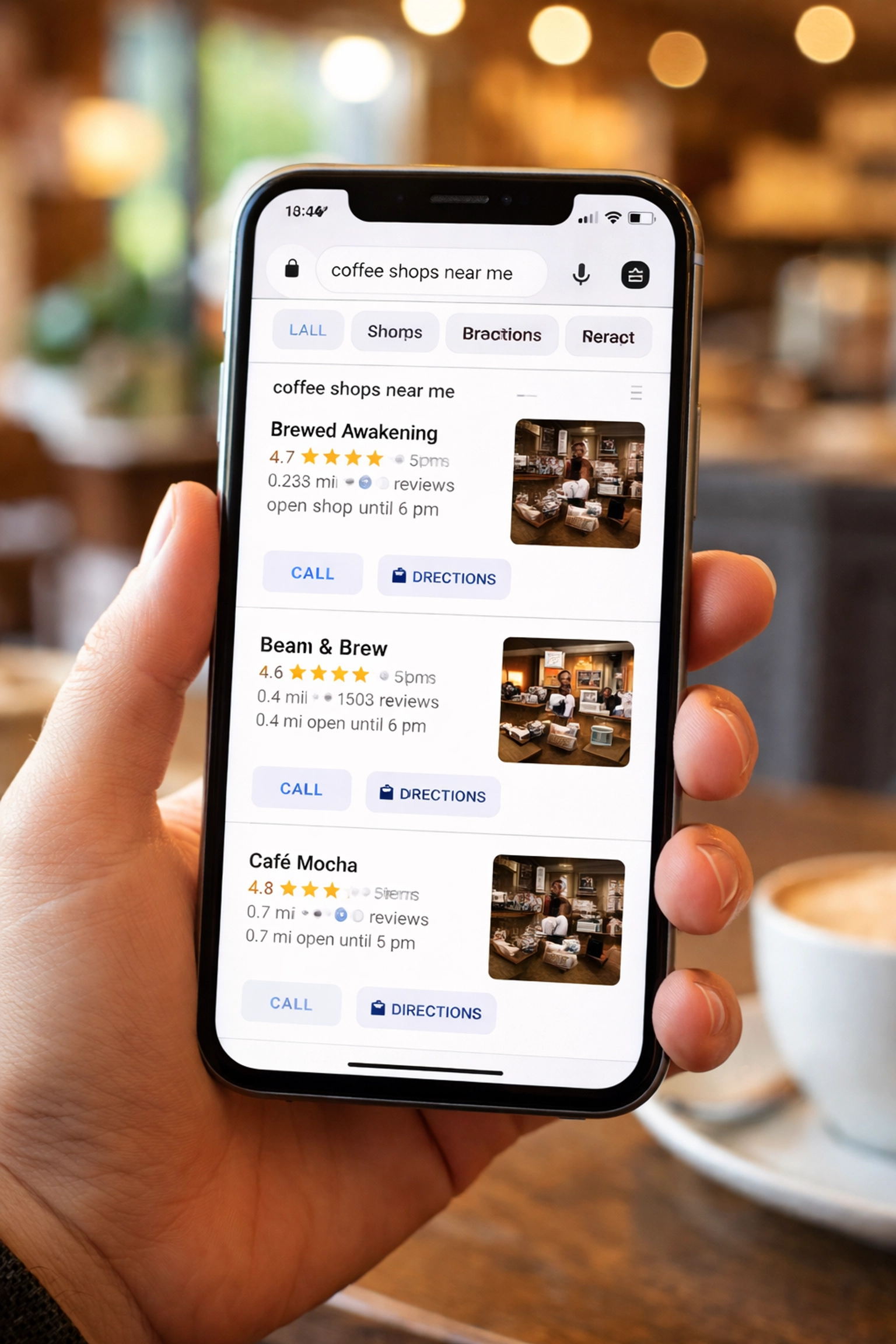
When someone searches "dentist near me" or "best HVAC repair," Google wants to show them businesses that are currently performing well: not ones that were great two years ago.
WHAT THIS MEANS FOR YOUR INDUSTRY
Let's get specific about what consistent review collection looks like for SMBs in different sectors.
Medical and Dental Offices
Target: 4-6 reviews per month
Medical and dental practices typically see fewer total patients than a busy restaurant, but each patient interaction is high-value and personal. The good news? Patients who have a positive experience at a doctor's office are often willing to leave reviews: they just need to be asked.
What works:
- Send a review request 24-48 hours after an appointment
- Make it easy with a direct link to your Google review page
- Focus on patients who've completed treatment milestones (finished braces, successful procedure, etc.)
The challenge for medical practices is HIPAA compliance: you can't reference specific treatments or conditions in your requests. Keep it simple: "We'd love to hear about your experience."
Restaurants
Target: 6-10 reviews per month
Restaurants have higher transaction volumes, which means more opportunities for reviews. But they also face stiffer competition: in most areas, there are dozens of restaurants competing for the same "best pizza near me" search.
What works:
- Train staff to mention reviews to satisfied customers
- Include a QR code on receipts or table tents
- Follow up with customers who make reservations or order delivery
One thing to watch: restaurants are also more vulnerable to fake reviews, both positive and negative. Maintaining a steady stream of authentic reviews helps protect you from the impact of occasional fraudulent ones.
Trades (HVAC, Plumbing, Electrical, Contractors)
Target: 4-8 reviews per month
Home service businesses live and die by their Google reviews. When someone's AC breaks in July or their pipes burst in January, they're not browsing: they're searching and calling the first trustworthy option they see.
What works:
- Send a review request immediately after job completion (while the relief is fresh)
- Have technicians mention reviews during the final walkthrough
- Follow up with customers after larger projects
For trades, a strong review profile doesn't just help with search rankings: it helps you command premium pricing. Customers are willing to pay more for a contractor they trust, and reviews build that trust before you ever shake hands.

THE REAL CHALLENGE: MAKING IT HAPPEN CONSISTENTLY
Here's where most small businesses struggle. You know you need reviews. You understand the benchmarks. But actually asking customers, following up, and doing it week after week? That falls off the radar when you're busy running your actual business.
This is exactly why automation matters.
Setting up a system that automatically sends review requests after appointments, purchases, or completed jobs takes the burden off your team. You're not relying on someone to remember to ask, and you're not letting weeks go by without new reviews rolling in.
Brand Defender helps businesses automate this entire process: from sending timely review requests to monitoring what comes in. Instead of manually chasing reviews, you can focus on delivering great service while the system handles the rest.
The goal isn't to manipulate your review count. It's to make sure happy customers have an easy opportunity to share their experience. Most satisfied customers don't leave reviews simply because no one asks them. Automation solves that problem.
If you're curious about how to ask without annoying people, we covered that in detail here.
QUALITY AND CONSISTENCY OVER QUANTITY
Let's recap what actually matters:
- Aim for 4-8 reviews per month as a baseline for most SMBs
- Consistency beats volume: a steady stream outperforms sporadic bursts
- Recency is critical: 73% of consumers only trust reviews from the last month
- Automation removes the manual headache and keeps reviews flowing without constant effort
There's no magic number that guarantees success. But if you can establish a system that generates fresh, authentic reviews every week, you'll outperform competitors who are either ignoring reviews entirely or trying to game the system with bulk tactics.
Your goal should be building a review profile that accurately reflects your current quality of service: and making sure potential customers can see that proof when they're searching for exactly what you offer.