

Let's settle this once and for all.
You've got 200 five-star reviews. Your competitor down the street? Maybe 50. You should be dominating local search, right?
Not so fast.
If those 200 reviews are from 2022 and your competitor has been collecting fresh ones every week, guess who Google is probably showing first? Spoiler: it's not you.
Review recency has quietly become one of the most important factors for both Google rankings and customer trust in 2026. And if you're still coasting on reviews from a couple of years ago, this post is your wake-up call.
WHY FRESH REVIEWS NOW OUTWEIGH TOTAL VOLUME
Here's what's changed: Google's algorithm has shifted to prioritize fresh engagement over sheer numbers.
Think about it from Google's perspective. A business with hundreds of old reviews but radio silence for the past year? That's a red flag. Are they still operating? Is the quality still the same? Did something happen?
Meanwhile, a business steadily collecting reviews month after month signals that:
- They're actively serving customers
- People are still happy enough to leave feedback
- The business is alive and thriving
The data backs this up. A business collecting regular reviews monthly can now outrank a competitor with a higher overall rating but minimal recent activity. That's a big deal.

So if you've been thinking "I already have enough reviews," it might be time to rethink that strategy.
OLDER REVIEWS ARE LOSING THEIR POWER
Here's something that might sting a little.
Reviews older than six months currently carry about 40% less weight in consumer decisions compared to reviews from the past month. And that gap is expected to widen to 55% by the end of 2026.
What does this mean for your business?
Those glowing five-star reviews from 2023? They're providing diminishing returns. They're not worthless, social proof is still social proof, but they're not pulling the weight they used to.
Customers have gotten smarter. They scroll. They check dates. And when they see that your most recent review is from eight months ago, a little voice in their head asks: "What's been going on since then?"
Fair or not, silence is suspicious in 2026.
WHAT CUSTOMERS ACTUALLY THINK WHEN YOUR REVIEWS ARE STALE
Let's get into the psychology here.
When a potential customer lands on your Google Business Profile and sees:
- A handful of reviews
- No recent activity
- Or worse, tumbleweeds
They don't think "Oh, this business is established and doesn't need reviews anymore."
They think:
- "Is this place still open?"
- "Did something bad happen?"
- "Maybe I should check out that other option with more recent feedback..."
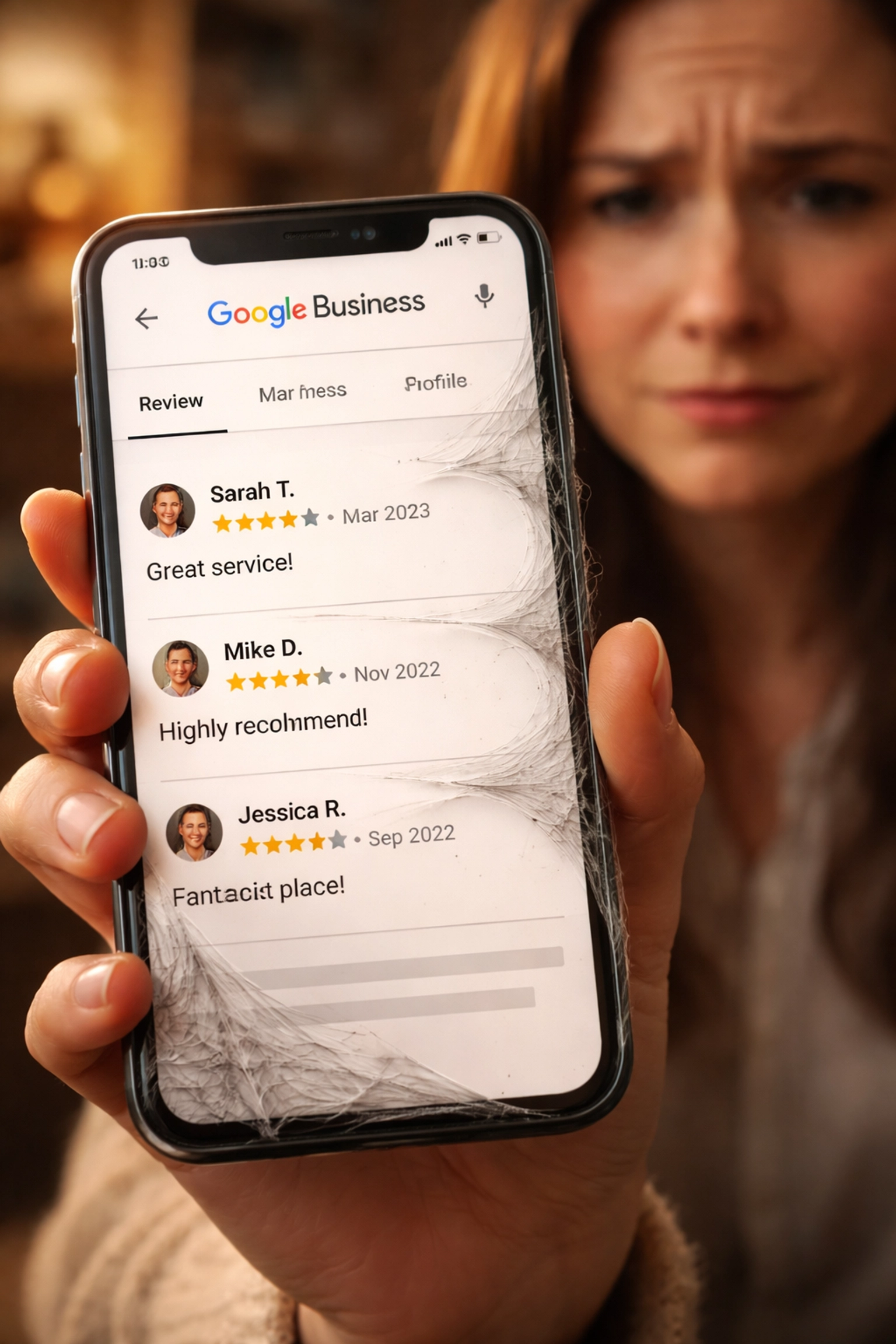
For modern customers, a quiet review profile feels stagnant or abandoned. It's the digital equivalent of walking past a restaurant with empty tables while the place next door is buzzing.
On the flip side, businesses that respond to at least 75% of their reviews are perceived as 2.8 times more trustworthy. That's not a typo, nearly three times more trustworthy just for showing up and engaging.
If you want to dig deeper into why responding matters so much, we covered this in detail here.
REVIEW VELOCITY: SLOW AND STEADY WINS THE RACE
Now, before you panic and try to collect 50 reviews this week, let's talk about velocity.
Google isn't just looking for recent reviews. It's looking for consistent recent reviews.
A sudden spike of reviews followed by months of nothing looks suspicious, both to the algorithm and to customers. It screams "marketing campaign" rather than "genuinely loved business."
What works better? A steady stream of 3-5 reviews monthly. This signals:
- Consistent customer satisfaction
- Ongoing business activity
- Authentic engagement (not a one-off push)
Think of it like exercise. A 30-minute walk every day beats running a marathon once a year and then doing nothing. Consistency compounds.
So the goal isn't to chase review explosions. It's to build a sustainable system that keeps fresh reviews flowing in regularly.
PRACTICAL WAYS TO KEEP YOUR REVIEWS FRESH
Alright, let's get into the "what do I actually do about this" part.
1. Ask at the right moment
Timing is everything. The best time to ask for a review is right after a positive interaction, when the experience is fresh and emotions are high. Wait too long and that enthusiasm fades.
We wrote a whole guide on how to ask for reviews without annoying your customers if you want the full playbook.
2. Make it ridiculously easy
Every extra step between your customer and the review box is a drop-off point. Send them a direct link. Don't make them search for your business. Don't make them figure out where to click.
One tap. That's the goal.
3. Automate the ask
Let's be honest, you're busy running a business. You're not going to remember to ask every happy customer for a review.
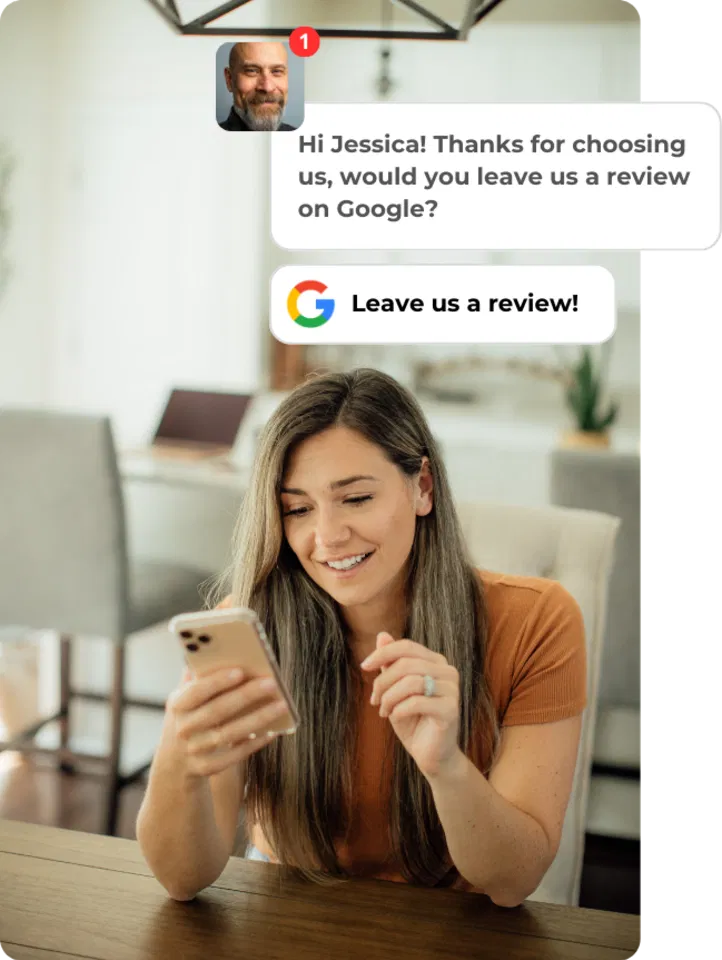
This is where automation becomes your best friend. Set up a simple system that sends a friendly review request after each completed service or purchase. No extra work on your end, but the reviews keep rolling in.
4. Respond to every review (yes, every one)
We already mentioned that responding boosts trust. But it also encourages more reviews. When people see that a business actually reads and replies to feedback, they're more likely to leave their own.
Plus, responding keeps your profile active, which Google notices.
If you're drowning in reviews and don't have time to craft individual responses, there are AI automation tools that can help you stay responsive without spending hours on it.
5. Share your best reviews on social media
Here's a two-for-one strategy: take your best recent reviews and turn them into social media content.
This does a few things:
- Reminds your audience how awesome you are
- Shows potential customers that people are actively reviewing you
- Encourages others to leave their own reviews (social proof is contagious)
We put together a quick guide on promoting your top reviews on social if you want step-by-step instructions.
HOW BRAND DEFENDER FITS INTO THIS
Here's where we come in (and no, this isn't a hard sell: just context on how our tools address the stuff we've been talking about).
Brand Defender is built to help small and medium businesses:
- Consistently collect new reviews through automated requests sent at the right time
- Manage all reviews in one place so you can respond quickly without jumping between platforms
- Share your best reviews on social media with a few clicks, keeping your online presence fresh and active

The goal is simple: take the manual work out of reputation management so you can focus on running your business while your review profile stays healthy and current.
If you're curious about how it works, you can explore options on our plans page.
THE BOTTOM LINE
Review recency isn't a nice-to-have in 2026. It's table stakes.
Google cares about fresh reviews. Your potential customers care about fresh reviews. And the businesses that figure out how to keep a steady stream of recent feedback flowing are the ones showing up first in local search: and winning the trust of new customers.
The good news? You don't need thousands of reviews. You just need consistent, recent ones.
So if your review strategy has been "set it and forget it," now's the time to shift to "keep it flowing."
Your future customers are already checking the dates. Make sure you give them something recent to read.