

You ran a big promo last month. Sent out 500 text messages. Begged every customer. The result? 50 shiny new Google reviews all posted within two weeks.
Victory, right?
Not exactly.
Here's the problem: Google's 2026 spam filters see that surge and immediately get suspicious. And your customers? They scroll past reviews from eight months ago like they're ancient history.
If you want to dominate local search this year, you need to stop chasing review "campaigns" and start building review momentum. Let's talk about why a steady trickle beats a flood every single time.
The Review Spike Red Flag
When 50 reviews land on your profile in the same week, Google's AI doesn't throw you a party. It raises an eyebrow.
Why? Because legitimate businesses don't get 50 reviews all at once: unless they're running some kind of incentivized campaign (which, by the way, violates Google's policies). Even if your reviews are 100% real, a sudden spike followed by months of silence looks like review manipulation.
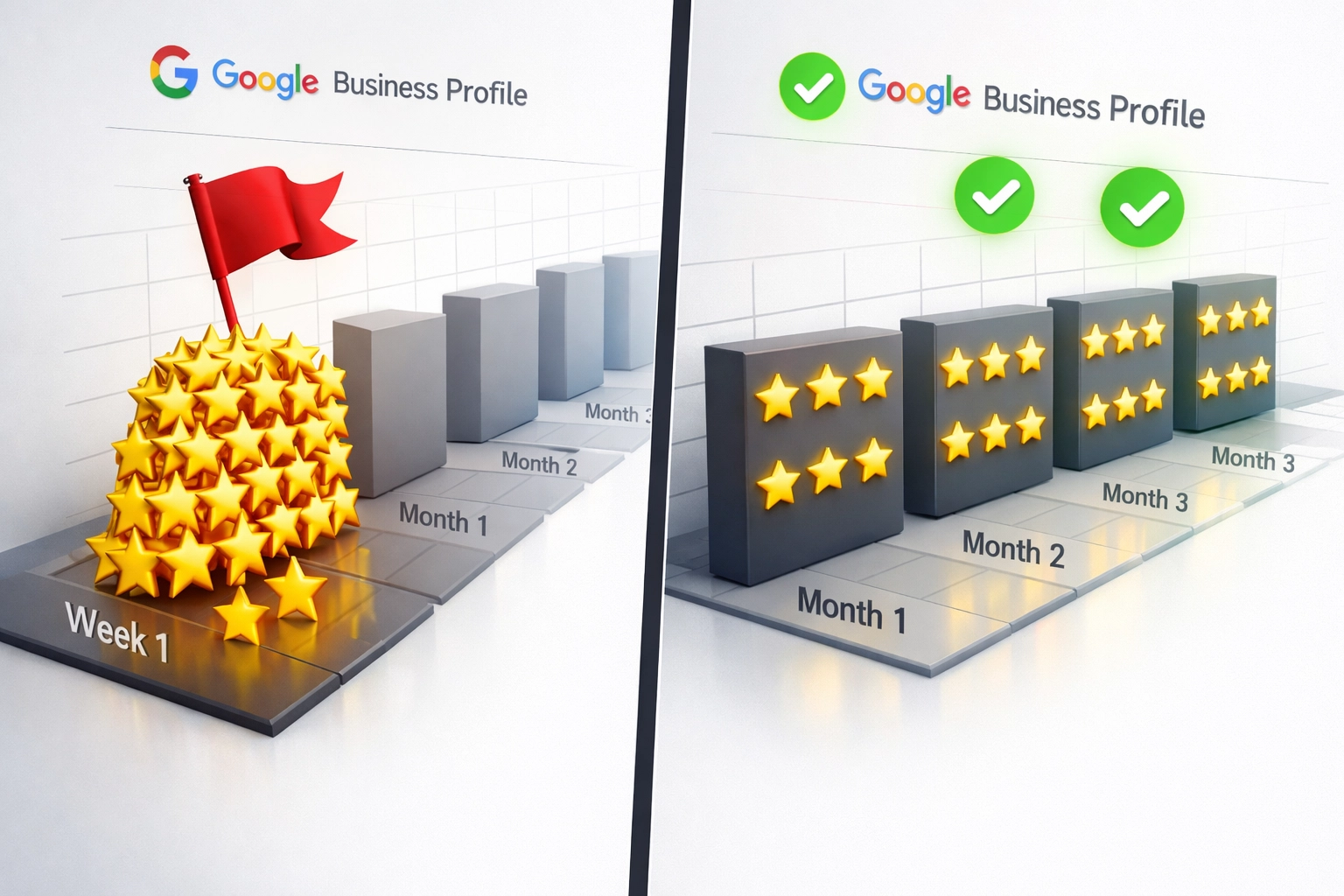
Google's algorithm in 2026 is smarter than ever. It tracks patterns. A business that gets 3-5 reviews every single month looks natural, active, and trustworthy. A business that gets 50 reviews in February and then nothing until October? That looks like a desperate one-time push.
And here's the kicker: after that initial spike wears off, you're right back where you started: except now your most recent review is six months old.
Recency Trumps Everything
Let's say you're a plumber with a 4.8-star rating and 200 reviews. Sounds great, right?
But if your last review is from nine months ago, you're going to lose to the plumber down the street with a 4.3-star rating and only 80 reviews: as long as their most recent one is from last week.
Why? Because 74% of consumers only trust reviews written within the last three months. And 32% of shoppers specifically look for reviews from the past two weeks.
Your potential customers aren't scrolling through your entire review history. They're looking at the top of your profile, seeing "Last review: 8 months ago," and moving on to someone who looks more active.

Google knows this. That's why recency is now one of the most important ranking signals for local businesses. A fresh stream of reviews tells Google: and your customers: that you're still in business, still serving people, and still worth recommending.
What Is "Review Velocity" and Why Does It Matter?
Review velocity is just a fancy term for how consistently you're getting reviews over time. Think of it like this:
- Low velocity: 50 reviews all at once, then nothing for months
- High velocity: 3-5 reviews spread out over every month
Google loves high velocity. Why? Because it signals genuine, ongoing customer satisfaction. It shows that people are actively choosing your business, week after week, and taking the time to leave feedback.
High review velocity also keeps your business "fresh" in Google's eyes. When Google's AI sees steady activity on your profile: new reviews, updated photos, regular posts: it assumes you're a thriving business worth promoting in search results.
Low velocity, on the other hand, suggests you're either dormant or running occasional review campaigns. Neither is a good look.
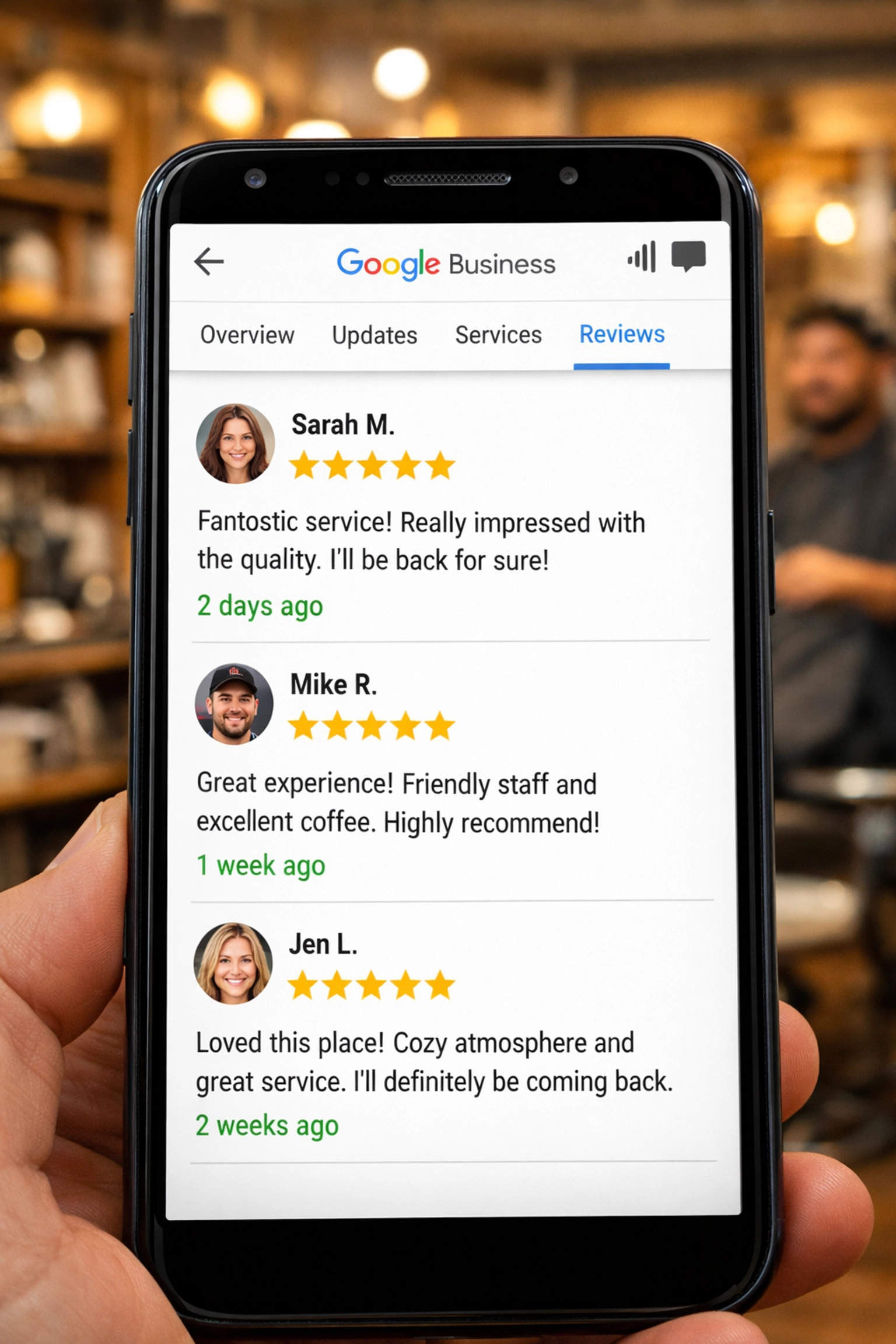
The Trust Factor: Why Customers Care About Recent Reviews
Put yourself in your customer's shoes for a second. You're searching for a dentist. You find two options:
- Dentist A: 4.8 stars, 300 reviews, most recent review from 10 months ago
- Dentist B: 4.5 stars, 120 reviews, most recent review from yesterday
Which one feels more trustworthy? Which one feels like it's still open and actively serving patients?
Most people pick Dentist B: even though Dentist A has a higher rating and more total reviews. Because recent reviews signal that this business is currently doing a good job, not just that they used to do a good job.
Old reviews also don't address current concerns. Maybe Dentist A hired a new receptionist who's rude. Maybe they raised their prices. Maybe their waiting room is under construction. Your potential customers have no way of knowing: because nobody's left a review in almost a year.
What the Numbers Say: How Many Reviews Do You Actually Need?
So what's the magic number? How many reviews should you aim for each month?
It depends on your business type, but here's a solid breakdown:
- High-volume businesses (restaurants, retail stores, car washes): 3-10 reviews per week
- Mid-volume businesses (salons, gyms, service providers): 1-3 reviews per week
- Low-volume businesses (specialty services, B2B, tradespeople): 2-4 reviews per month
Notice the pattern? It's not about hitting 100 reviews by December. It's about hitting 3-5 reviews every single month.
Even if you're a solo electrician who only completes 15 jobs a month, getting 3-4 reviews consistently will put you ahead of competitors who have 500 reviews but haven't gotten a new one since last summer.

The Problem: Asking for Reviews Is Exhausting
Here's where most businesses fall apart. You know you need consistent reviews. You know recency matters. But after a long day of unclogging drains, fixing brakes, or serving customers, the last thing you want to do is remember to send a review request.
So you don't. Weeks go by. Months go by. Then you panic, send out 200 text messages in one day, and the cycle starts all over again.
That's where a system comes in. Not a "campaign." A system.
How to Build a Review Engine (Not a Review Campaign)
The goal isn't to beg for reviews. The goal is to build a process that automatically asks the right customers at the right time: without you having to think about it.
Here's what that looks like:
- Automated follow-ups: After every job, service, or transaction, a friendly request goes out automatically
- Timing matters: The request goes out when the customer is still happy (within 24-48 hours, not two weeks later)
- No pressure, just a nudge: The message is simple, polite, and makes it easy for them to leave a review in under 60 seconds
This isn't about tricking people or incentivizing reviews (which violates Google's policies anyway). It's about making it easy for happy customers to share their experience: and doing it consistently, month after month.
That's how you get 3-5 reviews every single month without burning out.
Why Consistency Beats Heroics
Look, we get it. Running a business is hard. You're juggling a million things, and "managing Google reviews" isn't exactly at the top of your to-do list.
But here's the truth: you don't need to collect 50 reviews this month. You need to collect 3-5 reviews this month. And next month. And the month after that.
That steady rhythm is what Google rewards. That's what builds trust with customers. That's what keeps you at the top of local search results: not just today, but every single week.
Because in 2026, local SEO isn't won by the business with the most reviews. It's won by the business that never stops earning them.