
You finally got that customer to leave a glowing 5-star review. You're pumped. You check your Google Business Profile the next day, and... it's gone.
Not flagged. Not reported. Just poof, disappeared into thin air.
Welcome to 2026, where Google's AI moderation systems have gotten ridiculously aggressive. And yeah, they're deleting legitimate reviews at record levels.
Here's the thing: this isn't a bug. It's intentional. Google's cracking down on anything that even looks like it might be fake, incentivized, or coordinated. The problem? Their systems can't always tell the difference between a sketchy review farm and a small business genuinely asking happy customers for feedback.
Let's break down why this is happening and what you can actually do about it.
Why Google Is Deleting Your Real Reviews
Google's AI doesn't just read the words in a review. It's looking at dozens of signals to decide if a review is "authentic." And if something seems off, even if the review is 100% real, it gets removed.
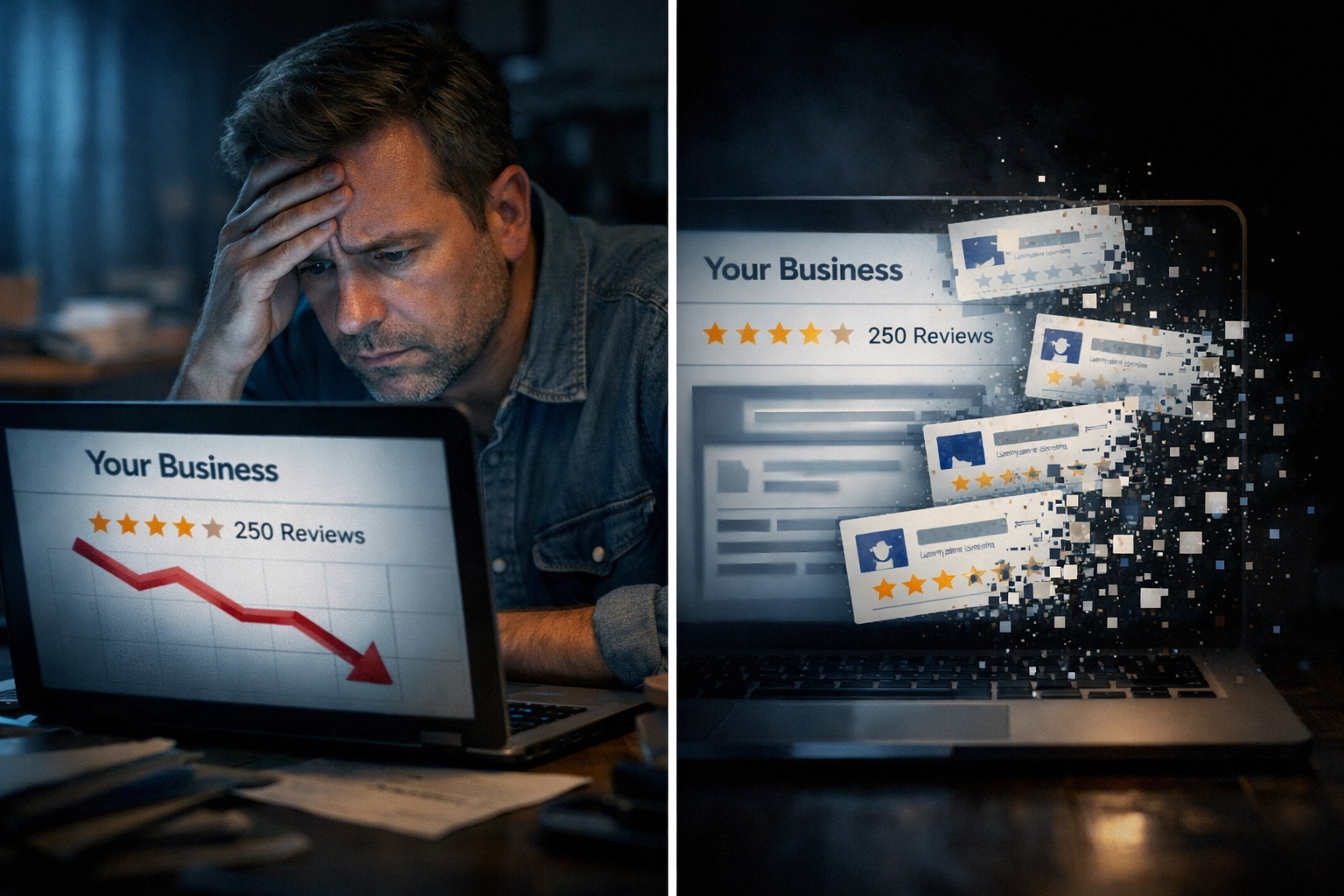
Here's what Google's watching:
Review velocity. If you suddenly get 10 reviews in two days after months of nothing, that looks suspicious. Even if all 10 are from actual customers who loved your service.
Reviewer behavior. Google tracks whether the person leaving the review has a history of reviewing businesses. Brand new Google accounts with no other activity? Red flag.
Keyword patterns. If multiple reviews use similar phrasing or keywords, Google might think you're using templates or coaching customers on what to say.
Timing and location data. If reviews come from IP addresses that don't match your business location, or if they all happen right after you send a mass email campaign, Google's AI picks up on that.
Account activity. Reviews from accounts that don't have much other Google activity (no searches, no YouTube usage, no Gmail history) are more likely to be flagged.
The wild part? Both positive and negative reviews are getting deleted at similar rates now. Google doesn't care about the star rating, it cares about whether the review looks real.
The Timeline Problem
Different industries see reviews disappear at different speeds.
In medical and home services, Google often removes flagged reviews within six months of posting. That's early automated intervention, the AI catches something it doesn't like and yanks the review before it's even been up for long.
In restaurants and retail, you might see reviews that are years old suddenly vanish. Google's systems keep learning and improving, so they go back and re-evaluate old reviews with their newer, stricter standards.
There's no warning. No notification. Just fewer reviews than you had yesterday.

5 Ways to Stop Losing Legitimate Reviews
Okay, enough doom and gloom. Here's what you can actually do to protect your review profile and keep Google's AI from nuking your hard-earned feedback.
1. Space Out Your Review Requests Naturally
Stop sending mass review requests all at once. Seriously.
If you email 50 customers on the same day asking for reviews, and 15 of them leave one within 24 hours, Google's going to flag that as coordinated activity: even if it's completely legit.
Instead, spread your requests out over time. Send them gradually throughout the week or month. Make it look like the natural flow of business, not a campaign.
Pro tip: Automate this the smart way. Brand Defender helps you send review requests on a staggered schedule that looks organic to Google's systems. No bulk blasts, no suspicious patterns.
2. Monitor Your Review Health Continuously
Reviews can disappear months or even years after they're posted. You need to keep an eye on your total count and catch deletions early.
Check your Google Business Profile weekly. Note your review count. If it drops, investigate immediately: don't wait until you've lost a dozen before you notice.
Monitoring also helps you spot patterns. Maybe reviews from a specific campaign are disappearing more than others. Maybe reviews from certain times of year get flagged. You can't fix what you don't track.
3. Never Incentivize Reviews (Or Make It Look Like You Are)
This should be obvious by now, but don't offer discounts, freebies, or anything else in exchange for reviews. Google's policies are crystal clear on this.
But here's the tricky part: even if you're not offering incentives, don't phrase your requests in a way that sounds like you are.
Bad: "Leave us a review and we'll give you 10% off your next visit!"
Also bad: "We'd love your feedback! As a thank you, here's a coupon for next time."
Google's AI picks up on language that suggests quid pro quo, even if you're just being nice.
4. Diversify How You Ask for Reviews
Don't use the exact same method every single time. Mix it up.
- Send some requests via email
- Use SMS for others
- Hand out QR codes in-store
- Ask in person after a great experience
- Include a link in your email signature
Why? Because if every single review comes from the same review link sent via the same automated email, that pattern looks manufactured.
Real businesses get reviews from all kinds of sources. Make yours look like that.

5. Help Reviewers Look Like Real People
This one's tough because you can't control your customers' Google accounts. But you can encourage behavior that makes their reviews less likely to be flagged.
When someone says they'll leave a review, suggest they:
- Use their real name and profile photo on their Google account
- Leave reviews for other businesses they visit (not just yours)
- Include specific details in their review, not just generic praise
The more their account looks like a real, active Google user: not a throwaway account created just to review your business: the better.
What Brand Defender Does Differently
Look, we get it. Managing reviews properly is a pain. You've got a business to run.
That's why Brand Defender exists. We handle the tricky stuff so you don't have to stress about Google's constantly-changing algorithms.
Here's how we help:
Smart request timing. We automatically space out review requests so they look natural to Google. No suspicious velocity spikes.
Review monitoring. We track your review count and alert you the moment something disappears so you can respond quickly.
Pattern avoidance. Our system varies request methods and timing to prevent the kind of patterns that trigger Google's AI.
Promotion of good reviews. When you get a great review, we help you showcase it properly: on your website, social media, wherever it matters: so even if Google removes it later, you've already gotten value from it.
We don't game the system. We just know how to work with Google's rules instead of against them.
The Bottom Line
Google's review moderation isn't getting any less aggressive. If anything, it's going to keep tightening up as their AI gets smarter.
The good news? You don't have to just accept losing legitimate reviews. By understanding what triggers deletions and building smarter processes around how you collect and manage reviews, you can protect your reputation.
Space out requests. Monitor constantly. Avoid patterns that look coordinated. Diversify your approach. Help your reviewers look authentic.
Or let Brand Defender handle it for you.
Either way, don't ignore this. Every deleted review is a missed opportunity to show up in local search and win new customers. Protect what you've earned.