
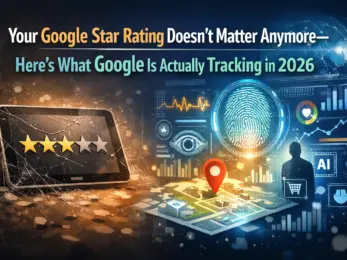
Look, I'm not saying your 4.8-star rating is worthless. But if you think that number alone is keeping you at the top of local search results, you're playing a game that ended about two years ago.
Google's algorithm has gotten way smarter. And by smarter, I mean it's watching a lot more than just whether you have five stars or four.
Let me explain what's actually happening behind the scenes in 2026.
THE OLD GAME: STARS AND NOTHING ELSE
Remember when getting reviews was simple? Get to 50+ reviews, keep your average above 4.5 stars, and you'd probably rank pretty well. Maybe throw in some keywords in your business description, keep your hours updated, and call it a day.
That strategy worked for years. Businesses would hustle to get as many five-star reviews as possible, maybe run a campaign once or twice a year, and then coast.
Not anymore.
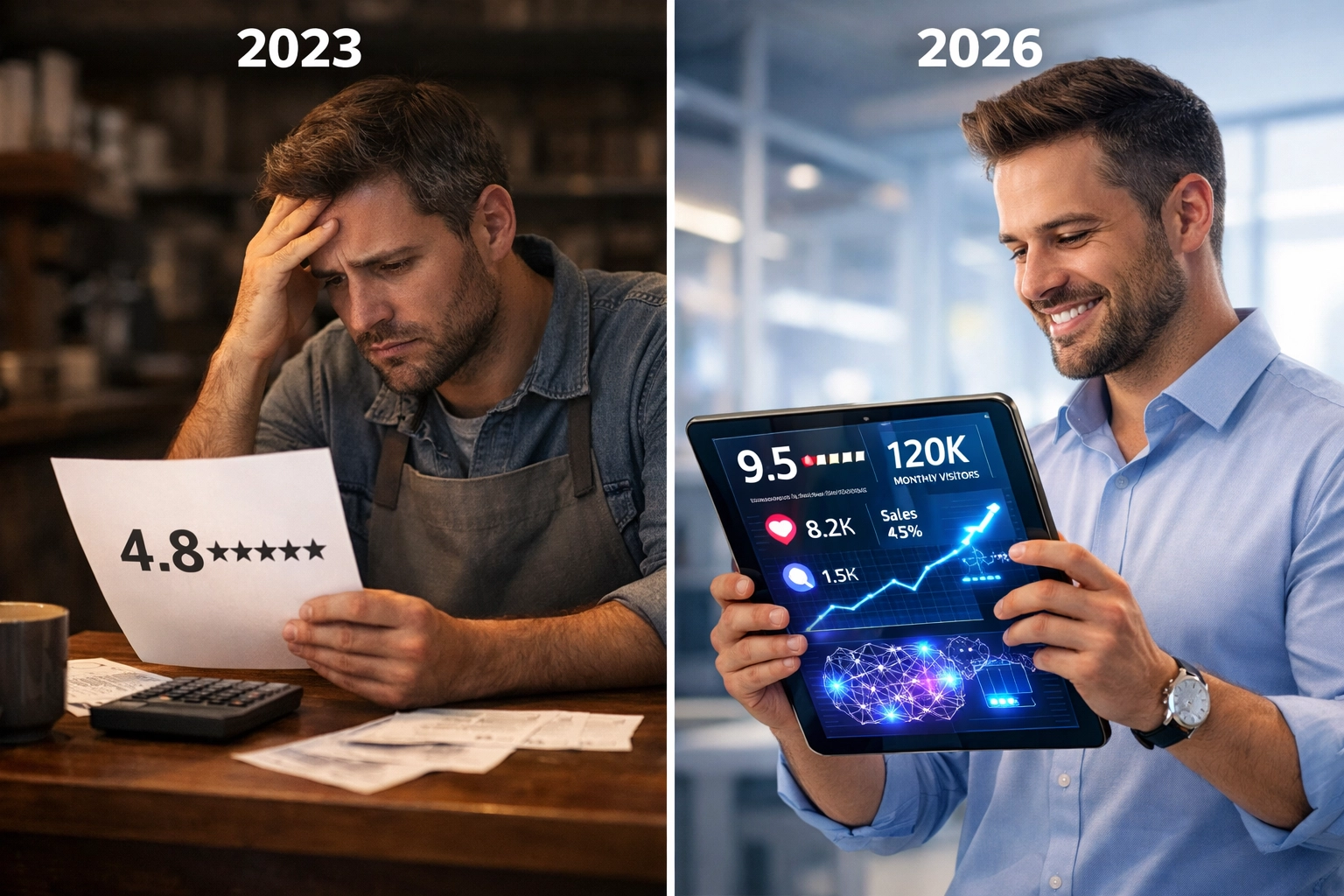
The problem is that everyone figured this out. Every plumber, dentist, and pizza place in your city has a decent star rating now. Google needed a better way to separate the businesses that are genuinely active and engaged from the ones just maintaining the status quo.
WHAT GOOGLE IS ACTUALLY TRACKING NOW
Here's where things get interesting. Google's AI doesn't just count stars anymore, it's reading, analyzing, and measuring how people actually interact with your business profile.
Review Velocity Matters More Than Total Count
Google is now paying close attention to when you get reviews, not just how many you have.
Getting 50 reviews in one month and then nothing for six months? That looks weird. It signals to Google's system that you probably ran a campaign, got a bunch of reviews, and then went back to ignoring your online presence.
What looks better? Consistently getting 3-5 reviews every single month. That tells Google you're actively serving customers and those customers are happy enough to leave feedback regularly.
This is the review velocity signal, and it's huge in 2026. A business with 200 reviews spread evenly over two years will often outrank a competitor with 300 reviews that all came in three big batches.
Profile Engagement Is Being Measured
This one surprises people. Google is tracking how people interact with your Business Profile beyond just reading reviews.
They're looking at:
- How many people view your photos
- How many people click your website link
- How many people request directions
- How many people call you directly from the profile
- How long people spend looking at your profile
Think about it, if someone searches for "plumber near me" and spends 30 seconds looking at your profile, clicks through three photos, and then calls you, that's a massive engagement signal. It tells Google your profile is relevant and useful.
Compare that to someone who clicks on your competitor's profile and bounces after two seconds. Google notices the difference.

AI Is Reading Your Review Content for Q&A
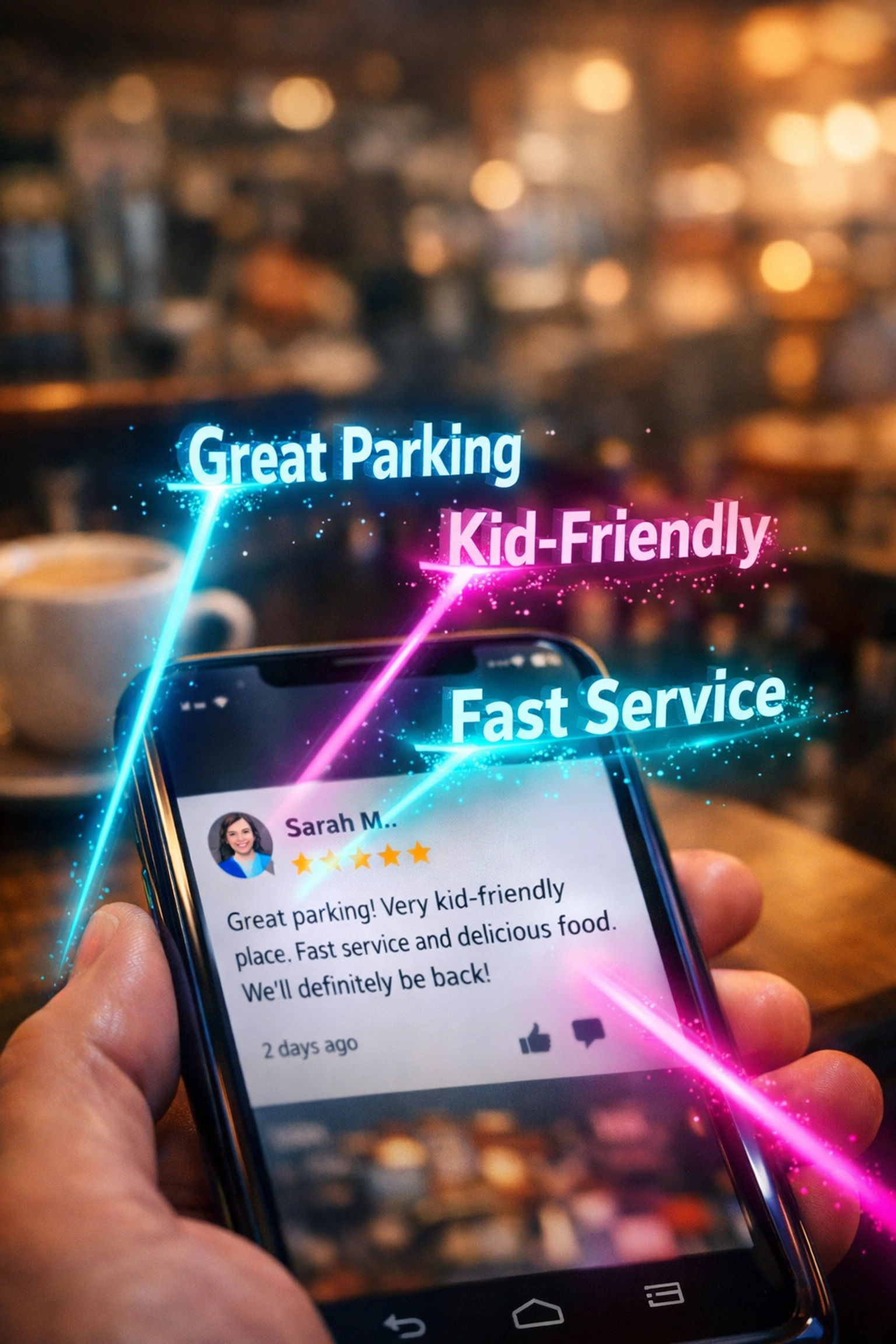
Here's the part that changes everything: Google's AI is actually reading the content of your reviews to answer questions people ask.
When someone searches "does [your business] have parking?" or "is [your restaurant] good for kids?", Google's AI scans your reviews looking for mentions of parking or families with children. It's pulling answers directly from what your customers have written.
This means the words in your reviews matter just as much as the star count. A review that says "Great service, the parking lot is huge and well-lit" is now more valuable than a review that just says "5 stars!"
Your reviews are feeding AI recommendation systems. They're not just social proof anymore, they're structured data that Google uses to understand what your business is actually like.
THE MULTI-PLATFORM CONSISTENCY FACTOR
Since late 2025, Google has been looking beyond just your Google Business Profile. They're checking if your reputation is consistent across other platforms too.
If you have great reviews on Google but terrible reviews on Facebook or Yelp, that inconsistency raises flags. Google's system is sophisticated enough now to track sentiment across multiple sources and look for patterns.
This also applies to how you respond to reviews. Since Google started moderating owner responses (yes, they review your replies before publishing them now), your responses have become official company communications. They're analyzing whether you're professional, helpful, and consistent in how you handle both positive and negative feedback.
A business that responds thoughtfully to every review with moderated, professional responses builds more trust than one that either ignores reviews or fires off quick, generic "thanks!" replies.
PSEUDONYMOUS REVIEWS CHANGED THE GAME
Here's a curveball from late 2025: Google now allows people to leave reviews with nicknames and avatars instead of their real names.
This increased review volume significantly, especially for sensitive industries like healthcare, legal services, and financial advisors. People are more comfortable leaving reviews when they don't have to attach their full name to it.
But it also means credibility now depends more on consistency and patterns rather than seeing a bunch of real names. Google's AI looks at review patterns, language consistency, and timing to determine if reviews are legitimate.
Having a mix of identifiable and pseudonymous reviews actually looks more natural now than having only "verified" reviewers with profile photos and full names.
WHAT THIS MEANS FOR YOUR BUSINESS
So what should you actually do with this information?
First, stop thinking about reviews as a one-time project. You can't just run a campaign, hit your goal number, and forget about it. You need a system that consistently generates reviews month after month.
Second, focus on getting detailed reviews, not just five-star ratings. Encourage customers to mention specific things: services they liked, features of your location, staff members who helped them. This feeds Google's AI with useful content.
Third, engage with your profile regularly. Post photos, update your services, respond to reviews, and keep your information current. Google rewards active profiles that show signs of life.
HOW BRAND DEFENDER FITS INTO THIS NEW REALITY
This is exactly why we built Brand Defender the way we did.
We help businesses maintain that consistent review velocity that Google is looking for. Instead of getting 50 reviews once a year, our clients get 3-5 reviews every single month because we make it easy to request reviews at the right moment: right after a positive customer experience.
But here's the part that addresses the engagement signals: we automatically promote your best reviews to your social media channels. When a great review comes in, we share it on Facebook, Instagram, or wherever you're active. This drives traffic back to your Google profile, creating those engagement signals Google is tracking.
More profile views, more photo clicks, more website visits: all the things that tell Google your business is active and relevant.
We also help you stay consistent across platforms, so you're not building a great reputation on Google while neglecting your presence elsewhere. That multi-platform consistency matters now more than ever.
THE BOTTOM LINE
Your star rating still matters: don't get me wrong. A 3.2-star average isn't going to cut it no matter how good your review velocity is.
But in 2026, star ratings are just the baseline. Google is evaluating your entire online presence: how often you get reviews, how people engage with your profile, what customers are actually saying in their reviews, and how consistent your reputation is across platforms.
The businesses that understand this are the ones showing up at the top of local search results. The ones still focused only on their star rating are slowly slipping down the rankings, wondering what changed.
The game evolved. Time to update your strategy.
If you want to see how Brand Defender helps businesses stay ahead of these ranking signals, check out what we're doing to keep our clients consistent, engaged, and visible in local search. Because in 2026, it's not about having the most stars: it's about showing Google you're an active, trusted business that real people actually care about.