
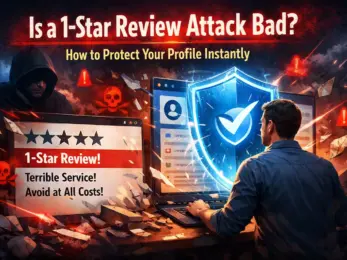
It’s a scenario that keeps many business owners up at night. You open your phone on a Wednesday morning, expecting to see a few new notifications, only to find twenty, fifty, or even a hundred 1-star reviews that weren't there when you went to bed.
This isn't just a disgruntled customer venting about a cold latte; this is a coordinated review attack. In 2026, where digital reputation is the primary currency for local businesses, a sudden influx of negative feedback can feel like a direct hit to your livelihood.
But is it actually as bad as it feels? And more importantly, what can you do right now to stop the bleeding and protect your Google Business Profile? Let’s break down the data, the psychological impact on your customers, and the immediate steps you should take to defend your brand.
THE REAL IMPACT: BY THE NUMBERS
When we talk about whether a 1-star review attack is "bad," we aren't just talking about hurt feelings. We are talking about cold, hard revenue. Research into consumer behavior consistently shows that reviews are the single most influential factor in whether a prospect chooses you or your competitor.
According to recent data, a single 1-star review can reduce purchase intent by approximately 42 percent if it appears on the first page of your search results. Think about that: nearly half of your potential customers might look elsewhere just because of one bad piece of feedback.
The damage scales quickly as the reviews pile up during an attack:
- One negative review: Drives away about 22 percent of prospects.
- Three negative reviews: Increases customer loss to 59.2 percent.
- Four or more negative reviews: Can drive away up to 70 percent of your potential business.
The financial consequences are equally stark. Companies with a 1-1.5 star rating report earning 33 percent less revenue than average enterprises. In an era where 94 percent of consumers explicitly avoid businesses with bad reviews, a coordinated attack isn't just a nuisance, it’s a financial emergency.

IDENTIFYING THE ATTACK: ACCIDENT VS. ATTACK
Before you can defend your profile, you need to know what you’re up against. There is a big difference between a "bad week" where a few customers were unhappy and a "coordinated attack."
A legitimate bad review usually contains specific details: "The plumber arrived 30 minutes late," or "The steak was overcooked." A review attack, however, often follows a specific pattern:
- High Volume in a Short Window: Dozens of reviews appearing within hours or minutes.
- Lack of Detail: Ratings often come without text, or they use generic phrases like "Terrible service" or "Avoid this place."
- Unfamiliar Names: The reviewers aren't in your customer database or CRM.
- New or Empty Accounts: Many of the accounts may have been created recently or have no other review history.
Google’s AI is getting better at spotting these patterns in 2026, but it isn't perfect. You can learn more about how Google monitors these patterns in our guide on how Google’s AI reads your profile right now.
STEP 1: THE "DON'T PANIC" RESPONSE STRATEGY
Your first instinct might be to fire back at every fake reviewer, calling them out or demanding they stop. Don't do this.
Responding to reviews is essential, businesses that respond to more than 20 percent of their reviews see a 33 percent increase in revenue, but your tone matters. When you are under attack, your responses are for the benefit of future customers who are reading the drama, not for the attackers themselves.
- Stay Professional: Address factual inaccuracies calmly.
- Use a Template (Carefully): While you don't want to look like a robot, having a structured way to say "We have no record of a customer by this name" helps keep you objective. Be careful not to fall into copy-paste disasters that could further hurt your ranking.
- Offer a Solution: Even if you suspect the review is fake, a response like "We take these matters seriously. Since we cannot find your record in our system, please contact us at [Phone Number] so we can investigate this immediately" shows real prospects that you are proactive.

STEP 2: DOCUMENT AND REPORT
Google has strict policies against "Review Manipulation" and "Spam and Fake Content." A coordinated attack is a clear violation of these terms.
- Flag Each Review: Use the "Report Review" feature on your Google Business Profile. Select "Spam" or "Conflict of Interest" as the reason.
- Keep a Log: Take screenshots. If the attack is happening across multiple platforms (Yelp, Facebook, Google), document the timeline. This is crucial if you need to appeal a rejection from Google’s automated support.
- Check for Policy Violations: Are the reviews using profanity? Are they off-topic? Google is much more likely to remove a review for a clear policy violation than for a "he-said, she-said" disagreement about service quality.
STEP 3: ACTIVATE THE "POSITIVE BUFFER"
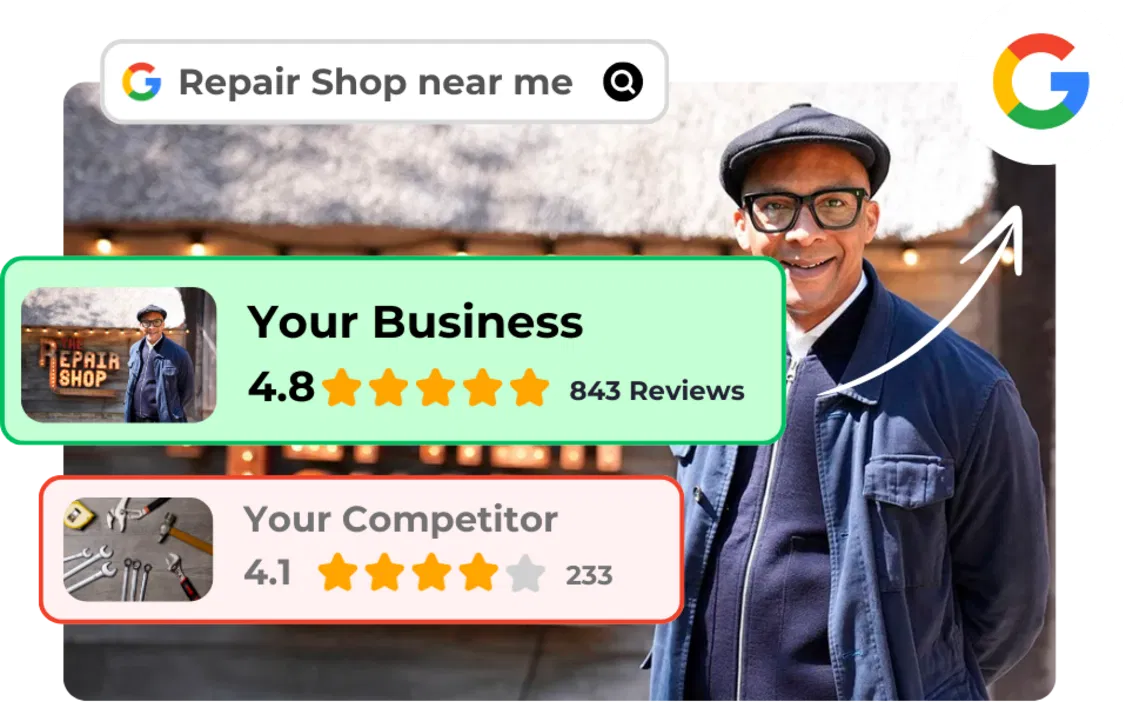
The best defense against 1-star reviews is a consistent stream of 5-star reviews. If you have 500 positive reviews, a sudden burst of ten 1-star reviews won't move your star rating much. However, if you only have ten reviews total, those same ten 1-star reviews will tank your business profile.
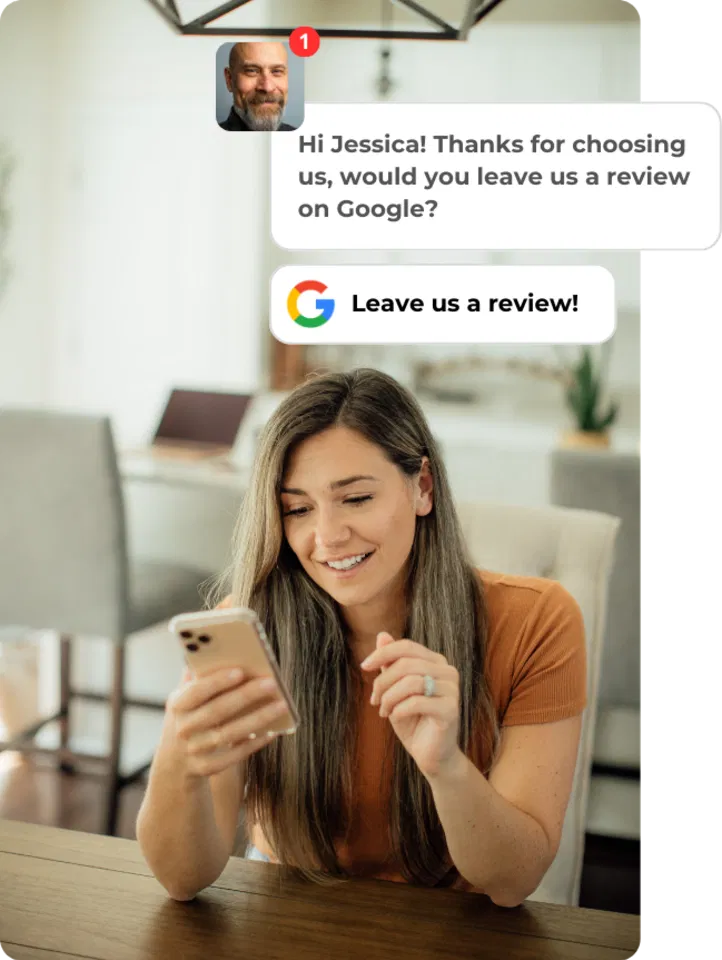
This is where "Review Velocity" becomes your best friend. Instead of waiting for customers to remember to leave a review, you should have a system in place to ask them immediately after a positive experience.

Using automated tools can help you generate legitimate reviews from your actual, satisfied customers to push the negative ones down in the search results. In fact, keeping a steady pace is more important than a one-time blast. We often recommend a strategy of 3-5 reviews every month rather than a giant spike once a year. This consistent activity tells Google that your business is healthy and active.
WHY ANONYMOUS REVIEWS ARE RISKY
During an attack, you might notice many reviews coming from "A Google User" or accounts with no profile picture. These anonymous-looking reviews are common in bot attacks. While Google allows some level of privacy, a profile filled with anonymous negativity is a red flag.
If you find that your profile is being targeted by these types of accounts, it's worth understanding why anonymous reviews might be hurting your business and how to highlight your verified, local customers instead.
THE 2026 RULES FOR RECOVERY
As we move through 2026, Google’s algorithms are focusing less on the total number of stars and more on the "authenticity" of the interaction. They are looking at:
- Location Data: Did the reviewer actually visit your store?
- Timing: Did the review happen right after a transaction?
- Keywords: Does the review mention specific services you offer?
If you are trying to recover from an attack, do not be tempted to buy fake 5-star reviews to "balance it out." Google’s 2026 rules are incredibly strict regarding review manipulation. Getting caught can lead to a permanent suspension of your profile. Stick to legitimate SMS hacks and automated requests to rebuild your reputation the right way.
SUMMARY OF IMMEDIATE ACTIONS
If you are currently under a 1-star review attack, here is your checklist:
- Do not engage emotionally. Do not argue with the trolls.
- Report every suspicious review for policy violations.
- Respond professionally to the most damaging reviews first, especially those making safety or legal allegations.
- Reach out to your happiest customers. Ask them for a quick review today to help dilute the negativity.
- Investigate the source. If it's a competitor or a former employee, you may need to involve legal counsel, but usually, platform reporting handles the bulk of the issue.
Protecting your profile is an ongoing job. While an attack is a crisis, your day-to-day reputation management is what builds the "shield" that prevents these attacks from being fatal to your business.
Whether you are just starting to build your online presence with a Starter Plan or you're looking for more aggressive growth strategies via a Growth Plan, having a system in place ensures that when the 1-star reviews come: and eventually, they always do: your business is strong enough to weather the storm.
For more tips on keeping your profile in top shape, check out our latest posts on the Brand Defender Blog. Stay safe out there!