If you’ve noticed a sudden drop in your Google review count lately, you aren’t alone. In early 2026, thousands of business owners woke up to find dozens, sometimes hundreds, of their hard-earned reviews simply gone.
The culprit? A massive crackdown on a practice called "Review Gating."
For years, review gating was the "secret sauce" for many digital agencies and business owners. It felt like a smart way to protect your reputation. But as we move further into 2026, the rules have shifted from "suggested guidelines" to "legal requirements with massive fines."
Here is the truth about review gating, why Google’s AI is smarter than ever, and how the FTC is now handing out five-figure penalties for something that used to be considered "just marketing."
WHAT IS REVIEW GATING, EXACTLY?
Review gating is the process of filtering your customers before they reach a public review platform like Google or Yelp.
Typically, it looks like this:
- You send a customer a text or email asking, "How was your experience?"
- If they click a "Thumb Up" or "4-5 Stars," they are automatically sent to Google to leave a review.
- If they click a "Thumb Down" or "1-3 Stars," they are directed to a private feedback form that goes only to you.
On the surface, it seems logical. You want to fix problems privately and showcase your wins publicly. However, both Google and the FTC (Federal Trade Commission) now view this as a form of "deceptive automated manipulation." By only asking happy people for a public review, you are creating a biased, "gated" version of your business’s reputation.

GOOGLE’S 2026 ENFORCEMENT: THE "SHADOW-BAN" ERA
Google has significantly ramped up its AI-driven moderation. In 2024, Google removed over 240 million policy-violating reviews. By the start of 2026, that number has nearly doubled.
Google’s stance is simple: you cannot "discourage or prohibit negative reviews, or selectively solicit positive reviews."
If Google detects that you are gating reviews, they don't just send you a warning email. They take action that can cripple a local business:
- Mass Deletions: Google may wipe out every review gathered during the period you were using a gating tool.
- The Shadow-Ban: This is the most frustrating penalty in 2026. Your customers might write a review, see it on their end, but it never shows up publicly. Why your legit Google reviews keep disappearing is often linked to the AI flagging your profile for manipulative solicitation patterns.
- Profile Suspension: In extreme cases, your entire Business Profile can be suspended, removing you from Google Maps entirely.
THE FTC’S $53,088 PROBLEM
While losing reviews is bad for your ranking, the FTC has introduced a much more expensive problem. The FTC Consumer Review Rule, which became fully enforceable with teeth in late 2024 and throughout 2025, makes review gating illegal under federal law.
As of 2026, the civil penalties are eye-watering. The FTC can charge up to $53,088 per violation.
In their eyes, every single "gated" review can be considered a separate violation of deceptive trade practices. If you think you're too small to be noticed, think again. In December 2025, the FTC began sending mass warning letters to small-to-medium businesses across the country, signaling that they are no longer just going after the "big fish."

WHY THE "5.0 STAR" OBSESSION IS HURTING YOU
Many business owners gate because they are terrified of a 1-star review. They think anything less than a perfect 5.0 is a failure.
In reality, your Google star rating doesn’t matter as much as you think in 2026. Customers have become savvy. When they see a business with 500 reviews and a perfect 5.0 rating, they don’t see a perfect business, they see a business that is likely faking its reviews or gating them.
Studies show that a rating between 4.2 and 4.8 is actually more "trustworthy" to a modern consumer. It shows you are a real business that deals with real human beings.
Instead of trying to hide bad reviews, the winning strategy in 2026 is to have a solid plan for when they happen. If you've been targeted unfairly, you need a 5-step response plan for review extortion rather than trying to filter every customer behind a gate.
HOW TO GET REVIEWS WITHOUT BREAKING THE RULES
So, if you can’t gate, how do you protect your reputation? The answer is to move from "filtering" to "facilitating."
You should be asking every customer for a review, regardless of how the transaction went. This sounds scary, but it actually works in your favor for three reasons:
- Volume Outpacing Noise: If you get 20 honest reviews a month, one bad review from a "Karen" won't move the needle. Why you need 3-5 reviews every month is a much safer and more effective strategy than trying to get 50 perfect ones all at once.
- Google Trust: When Google sees that your review link is being sent to everyone and that reviews are coming in at a steady, natural pace, your "Trust Score" with the algorithm increases.
- Real Feedback: Sometimes, a negative review is actually a free consulting report. It tells you exactly where your business is failing so you can fix it before it costs you more customers.
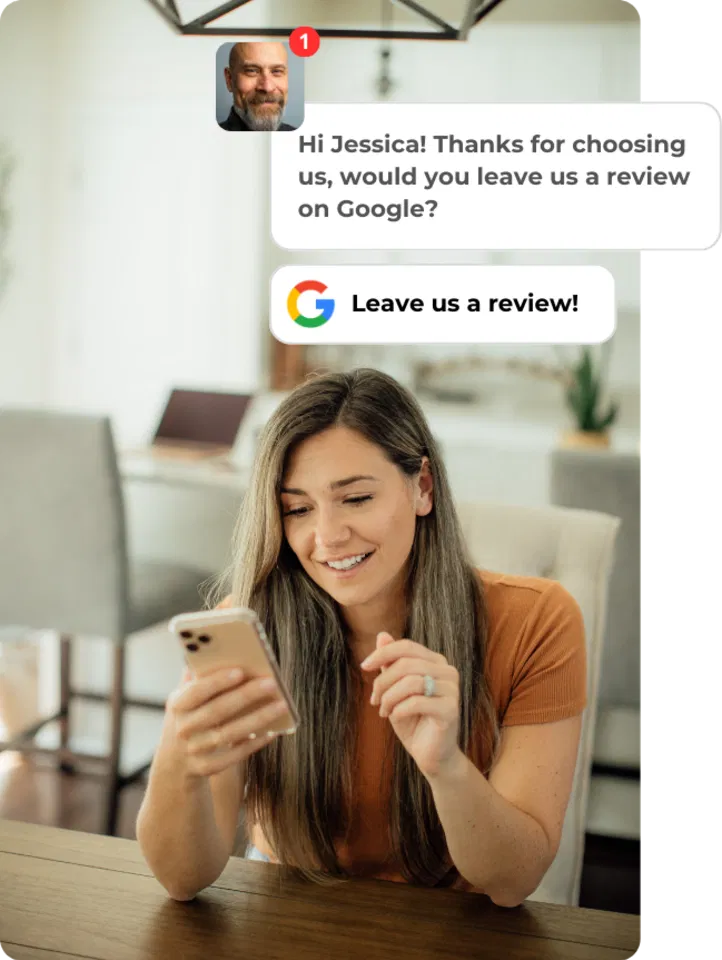
If you are a service professional, like a plumber or a painter, you don't need a complex gating software. You just need to know how to get a review before you even leave the driveway.
THE DANGERS OF "REVIEW INCENTIVES"
Another common mistake businesses make when trying to avoid gating is "Review Gifting." This is when you offer a $5 Starbucks card or a 10% discount in exchange for a review.
Just like gating, this is now a high-risk activity. Google’s AI is incredibly good at spotting "incentivized" reviews. If they see a sudden spike in reviews that all mention "thanks for the discount," they will flag your account. You can read more about what Google’s 2026 rules say about offering discounts.
WHAT TO DO IF YOU ARE CURRENTLY GATING
If your current software or agency uses a "pre-screening" step, here is how you can fix it today to avoid a "Google Purge":
- Disable the "Filter" Step: Change your automation so that the "Review Us" button is the first thing every customer sees.
- Ask for Feedback and Reviews Simultaneously: It is perfectly legal to say, "We’d love your public review on Google, and if you have any private feedback to help us improve, please reply to this email." This isn't gating; it's providing two options.
- Focus on Speed: Use SMS hacks for more reviews. Customers are much more likely to leave a positive review if the request hits their phone while they are still feeling the "win" of your service.

THE VERDICT FOR 2026
Is review gating actually bad?
- From a marketing perspective: It’s risky and makes your profile look "too perfect" to be true.
- From a Google perspective: It’s a policy violation that can lead to your reviews being deleted.
- From a legal perspective: It’s a deceptive practice that can result in massive FTC fines.
In 2026, transparency is your best friend. Your Google Profile is your new website, and its value lies in its authenticity.
At Brand Defender, we believe in protecting your reputation by being proactive, not by hiding. Whether you are looking for a Starter Plan to get the ball rolling or a Pro Plan to scale your reputation across multiple locations, the goal remains the same: building a profile that is honest, compliant, and impossible for competitors to beat.
Stop trying to "gate" the bad experiences. Start creating more good ones and making it as easy as possible for your customers to tell the world about them.